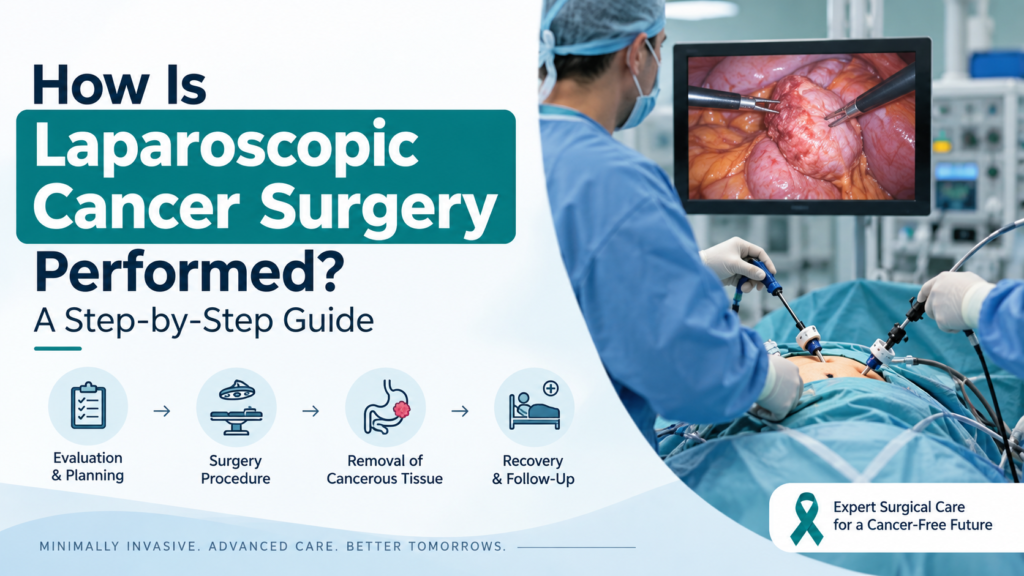
How Is Laparoscopic Cancer Surgery Performed? A Step-by-Step Guide
Being told that you may need cancer surgery can feel overwhelming. Many patients have questions about how the surgery is performed, whether it is safe, how long recovery takes, and whether a minimally invasive approach is possible. Laparoscopic Cancer Surgery in Lucknow is an advanced surgical approach that may be considered for selected cancers, particularly certain gastrointestinal cancers. Instead of making one large incision, the surgeon uses small incisions and specialized instruments to access and treat the affected area. Dr. Pradeep Joshi, Senior Laparoscopic & Gastrointestinal Surgeon in Lucknow, specializes in advanced laparoscopic procedures, GI oncology, gastrointestinal surgery, liver and pancreatic surgery, and other complex minimally invasive procedures. The exact surgical approach depends on the type and stage of cancer, its location, the patient’s overall health, and the surgeon’s assessment. What Is Laparoscopic Cancer Surgery? Laparoscopic Cancer Surgery in Lucknow is a minimally invasive surgical technique used to remove cancerous tissue or tumors through small abdominal incisions. A thin camera called a laparoscope is inserted through one of these openings. The camera provides a magnified view of the surgical area on a monitor. The surgeon then uses specialized instruments through additional small incisions to perform the procedure. Depending on the cancer, surgery may involve removing a tumor, part of an organ, nearby lymph nodes, or other affected tissues. In some cases, reconstruction may also be required. The goal of Minimally Invasive Cancer Surgery in Lucknow is to provide effective cancer surgery while limiting the size of surgical wounds when laparoscopic treatment is appropriate. Who May Need Laparoscopic Cancer Surgery in Lucknow? Not every cancer patient is a candidate for laparoscopic surgery. The decision depends on several important factors. A surgeon may consider: Type of cancer Location of the tumor Size of the tumor Stage of cancer Involvement of nearby organs Lymph node involvement Previous abdominal surgeries Overall health and fitness for anesthesia Need for complex reconstruction Availability of appropriate surgical expertise Certain gastrointestinal cancers may be suitable for a laparoscopic approach. However, cancer surgery must always prioritize complete and appropriate removal of the disease. A consultation with an experienced Laparoscopic Cancer Surgeon in Lucknow can help determine whether this approach is suitable for an individual patient. How Is Laparoscopic Cancer Surgery in Lucknow Performed? Understanding the steps involved can make the surgical process easier to understand. While each operation is different, the general process usually includes the following stages. Step 1: Cancer Evaluation Before Surgery Before Laparoscopic Cancer Surgery in Lucknow, the surgical team performs a detailed evaluation. The doctor may review previous medical records, pathology reports, scans, blood tests, and other diagnostic information. Imaging tests such as CT scans or MRI may help determine the location and extent of the cancer. The surgeon also reviews the patient’s medical history, medications, allergies, previous surgeries, and general health. This evaluation helps the surgical team understand the disease and plan an appropriate treatment strategy. Step 2: Determining the Surgical Approach Once the cancer has been evaluated, the surgeon determines whether laparoscopic surgery is appropriate. For some patients, laparoscopic surgery may provide an effective minimally invasive option. For others, open surgery may be safer or more appropriate because of the location, size, spread, or complexity of the cancer. An experienced Laparoscopic Cancer Surgeon in Lucknow considers both the cancer treatment goals and the patient’s individual circumstances before recommending an approach. The decision should not be based only on having smaller incisions. The most important goal is appropriate cancer treatment. Step 3: Preoperative Preparation Before surgery, the patient receives instructions regarding food, fluids, medications, and other preparations. Depending on the procedure, bowel preparation or other specific preparation may be required. The anesthesia team also evaluates the patient before surgery. Routine investigations may include blood tests, an ECG, chest evaluation, or other tests when medically necessary. Patients should inform their doctor about all medications and supplements they take. Good preparation can help reduce avoidable complications and support a smoother surgical experience. Step 4: General Anesthesia Laparoscopic GI Cancer Surgery in Lucknow is generally performed under general anesthesia. The patient remains asleep and does not feel the surgical procedure. The anesthesia team continuously monitors important parameters such as heart rate, blood pressure, oxygen levels, and breathing throughout the operation. After anesthesia is administered, the surgeon and surgical team prepare the abdomen for the procedure. Step 5: Creating Small Surgical Incisions One of the key features of laparoscopic surgery is the use of small incisions. Instead of making one large opening, the surgeon generally creates several small openings in the abdomen. The exact number and position depend on the type of cancer surgery being performed. Through one incision, the laparoscope is introduced. Other openings allow the surgeon to insert specialized surgical instruments. These instruments are designed to help the surgeon perform precise movements within the abdomen. Step 6: Introducing the Laparoscope The laparoscope contains a camera and light source. It allows the surgeon to see the internal organs on a high-resolution monitor. camera can provide a magnified view of the surgical area, helping the surgeon identify important anatomical structures. This enhanced visualization is one of the important components of Minimally Invasive Cancer Surgery in Lucknow. The surgeon carefully examines the operative area before proceeding with the planned cancer procedure. Step 7: Identifying the Tumor and Surrounding Structures The surgeon carefully identifies the tumor and evaluates surrounding tissues. Depending on the type of cancer, nearby lymph nodes and other structures may also need to be assessed or removed. Cancer surgery requires careful attention to anatomy because important blood vessels, nerves, ducts, and organs may be located close to the tumor. The surgical plan is followed while maintaining the principles of safe and appropriate cancer removal. Step 8: Removing the Cancerous Tissue The next stage involves removing the tumor or affected organ segment. The exact procedure depends on the type of cancer. For example, surgery for a gastrointestinal tumor may involve removing the affected section of the digestive tract along with nearby lymph nodes. In selected cases, procedures may involve the stomach, intestine, gallbladder, liver, pancreas, or other structures. GI Cancer Surgery in Lucknow may therefore involve different techniques